 I have tried to speed the process up using Edinburgh Etch solution, but my EE solution didn't work well - it didn't seem to bite deeply into the plates. I hear I must add some copper to the solution to kickstart the EE solution, but my FeCl had already been used so it should have had copper in it.
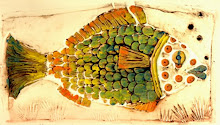
The print shown is a proof using FeCl and hard ground/line etch as well as an aquatint etch, printed using oil based ink. I made this in 2005, you think I should get to printing the edition soon? I guess I have been distracted!
If you read this and have any pointers on the FeCl bite issue, please leave a comment.
I had a little trouble with paragraph spacing. The Preview is different than the edit and the BLOG is different then either although I save edits so please excuse until I figure this out.
Thanks. blr
I have tried to speed the process up using Edinburgh Etch solution, but my EE solution didn't work well - it didn't seem to bite deeply into the plates. I hear I must add some copper to the solution to kickstart the EE solution, but my FeCl had already been used so it should have had copper in it.
The print shown is a proof using FeCl and hard ground/line etch as well as an aquatint etch, printed using oil based ink. I made this in 2005, you think I should get to printing the edition soon? I guess I have been distracted!
If you read this and have any pointers on the FeCl bite issue, please leave a comment.
I had a little trouble with paragraph spacing. The Preview is different than the edit and the BLOG is different then either although I save edits so please excuse until I figure this out.
Thanks. blr
Showing posts with label etching. Show all posts
Showing posts with label etching. Show all posts
Friday, December 4, 2009
Intaglio Etchings - FeCl & Cu Plates
The question of wiping plates came up on WetCanvas so I was thinking about intaglio plates.
I have, over the past few years, been trying to do some intaglio etchings using ferric chloride solutions and copper plates rather than the old nitric acid method with zinc that I used in college. I have had some success but I find ferric chloride more difficult to get going, the solution bites so slowly plus with the formation of bubbles on the plate you have to have the plate upside down and I haven't worked out a good way to do that.  I have tried to speed the process up using Edinburgh Etch solution, but my EE solution didn't work well - it didn't seem to bite deeply into the plates. I hear I must add some copper to the solution to kickstart the EE solution, but my FeCl had already been used so it should have had copper in it.
The print shown is a proof using FeCl and hard ground/line etch as well as an aquatint etch, printed using oil based ink. I made this in 2005, you think I should get to printing the edition soon? I guess I have been distracted!
If you read this and have any pointers on the FeCl bite issue, please leave a comment.
I had a little trouble with paragraph spacing. The Preview is different than the edit and the BLOG is different then either although I save edits so please excuse until I figure this out.
Thanks. blr
I have tried to speed the process up using Edinburgh Etch solution, but my EE solution didn't work well - it didn't seem to bite deeply into the plates. I hear I must add some copper to the solution to kickstart the EE solution, but my FeCl had already been used so it should have had copper in it.
The print shown is a proof using FeCl and hard ground/line etch as well as an aquatint etch, printed using oil based ink. I made this in 2005, you think I should get to printing the edition soon? I guess I have been distracted!
If you read this and have any pointers on the FeCl bite issue, please leave a comment.
I had a little trouble with paragraph spacing. The Preview is different than the edit and the BLOG is different then either although I save edits so please excuse until I figure this out.
Thanks. blr
I have tried to speed the process up using Edinburgh Etch solution, but my EE solution didn't work well - it didn't seem to bite deeply into the plates. I hear I must add some copper to the solution to kickstart the EE solution, but my FeCl had already been used so it should have had copper in it.
The print shown is a proof using FeCl and hard ground/line etch as well as an aquatint etch, printed using oil based ink. I made this in 2005, you think I should get to printing the edition soon? I guess I have been distracted!
If you read this and have any pointers on the FeCl bite issue, please leave a comment.
I had a little trouble with paragraph spacing. The Preview is different than the edit and the BLOG is different then either although I save edits so please excuse until I figure this out.
Thanks. blr

Wednesday, December 2, 2009
Clay Relief Etching - My History
The first clay relief etching I made and printed in 1997 in Linda Neely's works hop in CT is Trumpet Shell. Oil based Graphic Chemical (GC) inks are used, mixed with EZWipe. The plate is printed in color in a single printing. The intaglio is printed with burnt umber GC ink, the relief is a la poupee* with GC oil based inks.
The same method was used on my second plate, also created during that first workshop. Scallops. Linda said this wouldn't print well as it had too much "architecture".
hop in CT is Trumpet Shell. Oil based Graphic Chemical (GC) inks are used, mixed with EZWipe. The plate is printed in color in a single printing. The intaglio is printed with burnt umber GC ink, the relief is a la poupee* with GC oil based inks.
The same method was used on my second plate, also created during that first workshop. Scallops. Linda said this wouldn't print well as it had too much "architecture".  The plate did print although it did crack under pressure of the press. I think that adds an old world flavor and I love this print.
Some people believe that if prints are not identical these should be called monoprints. With new and different materials and printmaking methods the lines between what you call the method and how you number it are blurred.
Hope you liked this, more to come in the future!
* a la poupee means that the ink is applied to the surface of the etching plate prior to printing.
The plate did print although it did crack under pressure of the press. I think that adds an old world flavor and I love this print.
Some people believe that if prints are not identical these should be called monoprints. With new and different materials and printmaking methods the lines between what you call the method and how you number it are blurred.
Hope you liked this, more to come in the future!
* a la poupee means that the ink is applied to the surface of the etching plate prior to printing.

 hop in CT is Trumpet Shell. Oil based Graphic Chemical (GC) inks are used, mixed with EZWipe. The plate is printed in color in a single printing. The intaglio is printed with burnt umber GC ink, the relief is a la poupee* with GC oil based inks.
The same method was used on my second plate, also created during that first workshop. Scallops. Linda said this wouldn't print well as it had too much "architecture".
hop in CT is Trumpet Shell. Oil based Graphic Chemical (GC) inks are used, mixed with EZWipe. The plate is printed in color in a single printing. The intaglio is printed with burnt umber GC ink, the relief is a la poupee* with GC oil based inks.
The same method was used on my second plate, also created during that first workshop. Scallops. Linda said this wouldn't print well as it had too much "architecture".  The plate did print although it did crack under pressure of the press. I think that adds an old world flavor and I love this print.
Some people believe that if prints are not identical these should be called monoprints. With new and different materials and printmaking methods the lines between what you call the method and how you number it are blurred.
Hope you liked this, more to come in the future!
* a la poupee means that the ink is applied to the surface of the etching plate prior to printing.
The plate did print although it did crack under pressure of the press. I think that adds an old world flavor and I love this print.
Some people believe that if prints are not identical these should be called monoprints. With new and different materials and printmaking methods the lines between what you call the method and how you number it are blurred.
Hope you liked this, more to come in the future!
* a la poupee means that the ink is applied to the surface of the etching plate prior to printing.

Subscribe to:
Posts (Atom)